What is a Lot Number?
In modern supply chain management, knowing what product you have is only half the battle; you also need to know exactly when, where, and how it was made. This level of traceability relies on a fundamental tracking tool: the lot number.
A lot number—frequently referred to as a batch number or lot code—is a unique string of numbers and letters assigned to a group of products manufactured at the same time, in the same facility, using the same batch of raw materials.
Think of it as a shared “birth certificate” for a specific production run. If a factory produces 5,000 pallets of automotive brake pads on a Tuesday morning using a specific batch of raw materials, all 5,000 pallets will share the exact same lot number. Once that production run ends, the next batch will receive a new, different lot number.
Lot Number vs. SKU vs. Serial Number: What’s the difference?
People often confuse these three identification codes. While they all help manage inventory, they serve entirely different tracking purposes and use completely different coding formats:
SKU (Stock Keeping Unit)
An SKU identifies the product type. It tells the warehouse exactly what the item is based on its attributes (such as brand, style, or size). Whether that item was manufactured today or five years ago, as long as it is the exact same model, it will have the same SKU.
Common Format: An internal alphanumeric code defined by the company. Format: [Category]-[Attribute]-[Size].
Format Example: BRK-PAD-FRT (representing a Ceramic Front Brake Pad).
Serial Number
A serial number identifies a unique, individual item. It is used to track exactly one specific physical product. No two items in the world will share the same serial number.
Common Format: A highly unique, often sequential or randomized long alphanumeric string for security and warranty tracking. Format: SN-[Unique 10-digit code].
Format Example: SN-9876543210X.
Lot Number
A lot number sits right in the middle. It identifies a specific production group. Hundreds or thousands of identical items can share the same lot number, provided they were produced together.
Common Format: Often incorporates the manufacturing date, facility location, and batch sequence. Format: YYYYMMDD-Facility Code-Batch #.
Format Example: 20260609-F1-B02 (Manufactured on June 9, 2026, at Facility 1, Batch 02).
Summary Comparison Table
Feature | SKU | Serial Number | Lot Number |
Identifies | Product type / model | One unique, individual item | A specific production batch |
Uniqueness | Shared by all identical products regardless of when made | 100% unique to one single item | Shared by a group of items manufactured together |
Primary Use | Inventory counting and pricing | Warranty tracking and anti-theft | Expiration dates and product recalls |
Format Example | BRK-PAD-FRT | SN-9876543210X | 20260609-F1-B02 |
Why are lot numbers important in the supply chain?
Assigning and tracking lot numbers is not just a regulatory requirement for many industries; it is a critical risk management strategy.
- Targeted Product Recalls: If a defect is found in a manufactured automotive component or a contamination occurs in a food product, lot numbers prevent a total disaster. Instead of recalling every single item on the market—which destroys brand reputation and costs millions—a company can pinpoint and recall only the specific lot number affected by the issue.
- Expiration Date Management: In industries dealing with perishables, pharmaceuticals, or chemicals, lot numbers are directly tied to production and expiration dates. This allows warehouses to strictly enforce FEFO (First-Expired, First-Out) picking strategies to prevent inventory spoilage.
- Quality Control & Traceability: If a customer reports a faulty product, the manufacturer can use the lot number to trace the item all the way back to the specific assembly line, the shift workers on duty, or even the exact batch of raw materials supplied by a third-party vendor.
How does lot traceability work in a warehouse?
Effective lot traceability requires an unbroken chain of data throughout the physical warehouse. Typically, this spans across three core operational phases:
- Inbound: When a shipment arrives, workers or automated scanners record the product SKU, quantity, and the specific lot number into the system.
- Shelving (Storage): The software records exactly which shelf or bin contains that specific lot, ensuring precise spatial tracking.
- Picking & Outbound: When an order is placed, the system directs the picking operation to select goods from a specific lot (usually following strict FEFO rules). The lot number is then validated before shipping to the end customer.
Elevating lot management with Atomix Robotics
As supply chains grow in complexity, managing lot numbers across tracking stages demands robust data synchronization and precision. This is where Atomix Robotics—a provider of comprehensive, AI-powered warehouse automation solutions—empowers modern facilities.
To further elevate your inventory operations, our Atomixer Software Platform serves as a modular, AI-powered operating system that seamlessly integrates with your existing infrastructure. With flexible configuration and customizable modules, it intelligently manages the operational stages mentioned above through three core subsystems:
- iWMS (Sub-Warehouse Management System): Provides comprehensive control over inbound, shelving, relocation, and picking operations. It handles wave planning and order-level management, ensuring strict adherence to lot tracking and expiration rules (like FEFO).
- WES (Sub-Warehouse Execution System): Executes container-level coordination. It orchestrates instructions and uses advanced algorithms for heat matching, correlation analysis, and intelligent sorting to keep specific lots optimally positioned for rapid retrieval.
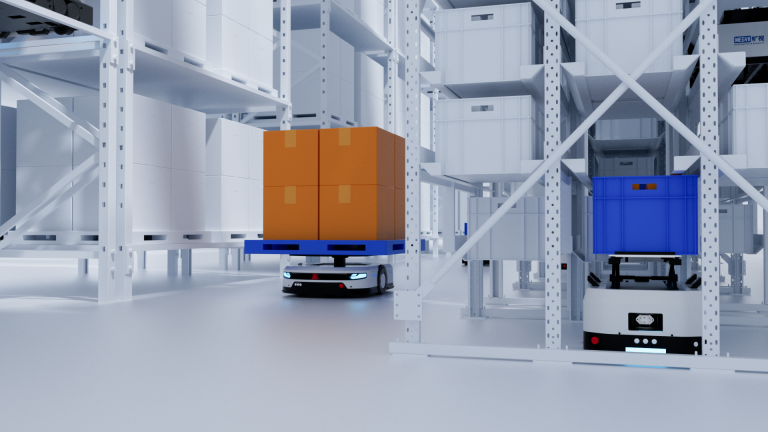
- TES (Task Execution System): Translates software instructions into physical movement. It features heterogeneous cluster scheduling, directing our fully automated solutions—such as AMRs and Pallet Shuttles—to retrieve the exact required lot with AI-optimized, point-to-point handling.
Coupled with our automated hardware, Atomixer creates a complete, closed-loop lot management system, ensuring highly accurate, compliance-ready traceability.
Contact Atomix Robotics today to learn how our software and automated solutions can optimize your warehouse management.