Automated Order Picking: A Guide to Optimizing Warehouse Throughput
In modern B2B logistics and supply chain management, speed, accuracy, and operational efficiency are the core metrics defining market competitiveness. According to the latest analysis from Research and Markets, the global automated warehouse picking market was estimated at USD 20.29 billion in 2025 and is expected to reach USD 22.04 billion in 2026, growing at a compound annual growth rate (CAGR) of 9.93% to reach USD 39.38 billion by 2032. This sustained trajectory highlights a widespread, industry-wide push to transition from manual workflows to automated, high-speed fulfillment networks.
Among these operations, order picking stands out as the most resource-heavy process, traditionally accounting for over half of total warehouse operating costs. This reality has driven a massive industry shift toward automated order picking. This article examines what automated order picking entails, its core operational benefits, standard picking modes, and how advanced modern systems help enterprises optimize their logistics workflows.
What is Automated Order Picking?
Automated order picking is the process of retrieving and preparing items for shipping using advanced robotic systems, automated material handling equipment, and specialized control software. Instead of relying on warehouse operators walking through aisles to manually locate and retrieve products, automated systems handle the physical transport, sorting, and sequencing.
A typical automated picking workflow consists of four main stages:
- Product Retrieval: Automated storage and retrieval systems (AS/RS) or shuttle systems retrieve storage containers (such as bins, totes, or pallets) from high-density storage positions.
- Internal Transport: Conveyors, vertical lifters, or Autonomous Mobile Robots (AMRs) transport the retrieved goods to designated workstations.
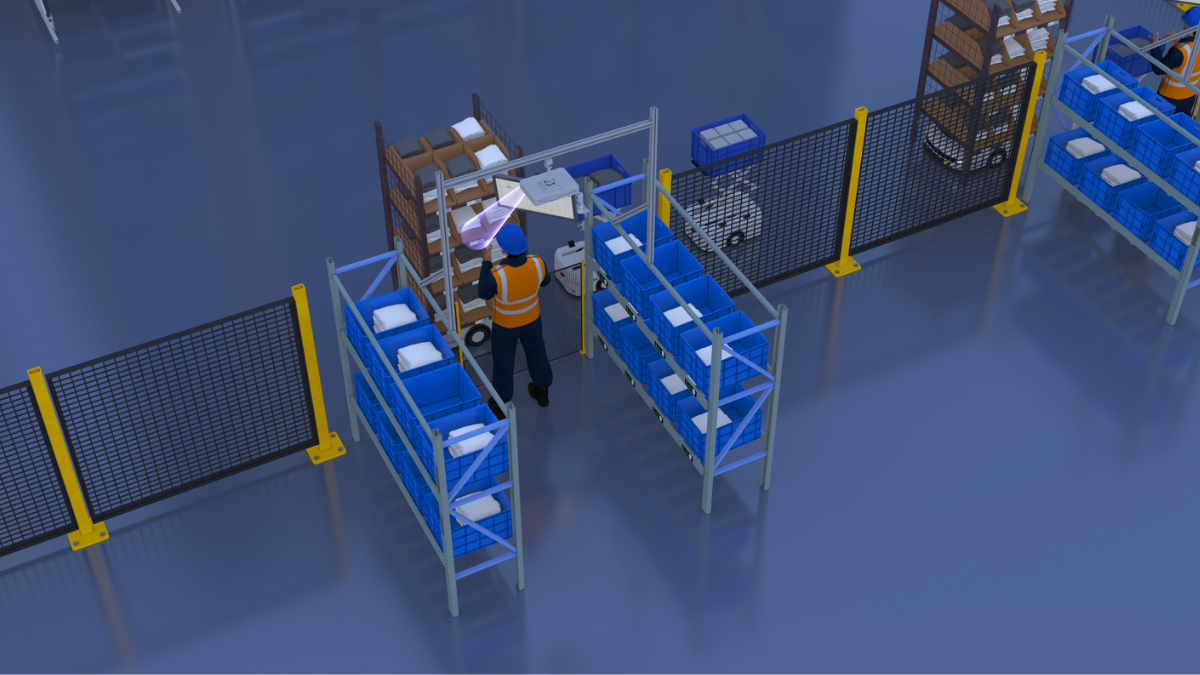
- Order Assembly (Goods-to-Person): The products arrive at ergonomic picking stations where operators (or robotic picking arms) pick the exact quantities required for each order.
- Software Orchestration: A Warehouse Management System (WMS) or Warehouse Execution System (WES) coordinates the entire process, routing tasks and tracking inventory in real time.
The Core Benefits of Automating the Picking Process
Implementing automation in the picking process offers measurable improvements to warehouse key performance indicators (KPIs):
- Increased Throughput: Automated systems operate continuously without fatigue, significantly increasing the number of order lines processed per hour.
- Minimized Error Rates: By replacing manual search-and-pick methods with software-guided validation, picking accuracy can reach nearly 100%, reducing return rates and associated reverse logistics costs.
- Optimized Space Utilization: Automated systems utilize high-density racking with narrow aisles, allowing warehouses to maximize vertical space. This often eliminates the need for expensive facility expansions.
- Mitigation of Labor Shortages: Automation relieves human operators from repetitive, physically demanding travel across the warehouse floor, allowing companies to allocate their workforce to safer, higher-value tasks.
Common Picking Modes in Industrial Logistics
Different warehouse structures and product characteristics require distinct picking strategies. The four most common picking modes include:
- Batch Picking: An operator retrieves multiple quantities of the same SKU at once to fulfill several different orders simultaneously, reducing total travel time.
- Wave Picking: Orders are grouped into “waves” based on specific criteria like shipping schedules, carrier routes, or product locations to optimize throughput.
- Order Picking: The traditional method where one order is picked at a time, from start to finish.
- Pallet Picking: Retrieving whole pallets of goods, typical in manufacturing, wholesaling, or bulk distribution.
Many traditional automated systems are rigid—designed exclusively for either small bins or heavy pallets. This forces companies to run disconnected systems, leading to process silos and higher capital expenditure.
Steps to Implementing Automated Picking
Transitioning to automated picking requires a structured, logical sequence. Warehouses must progress from data assessment to software preparation, followed by hardware deployment and algorithmic optimization:
- Analyze SKU Profiles & Order Demands: The process begins with a rigorous audit of your inventory data. You must analyze peak order volumes, seasonal fluctuations, and the physical characteristics of your products. This step determines whether your facility requires bin-level storage, pallet-level storage, or a hybrid configuration.
- Deploy the Software Foundation (WMS/WES): Before introducing any physical robots, the software control layer must be established. Implementing a robust Warehouse Management System (WMS) or Warehouse Execution System (WES) is crucial. This software will orchestrate workflow routes, track real-time inventory, and serve as the integration layer for your future hardware.
- Integrate Specialized Robotic Hardware: Once the software foundation is ready, match your physical requirements with targeted robotic hardware. This involves deploying high-density AS/RS systems, such as four-way pallet shuttles or six-way bin shuttles, and pairing them with Autonomous Mobile Robots (AMRs) to handle the physical transport to ergonomic picking stations.
- Apply Wave & Path Optimization Algorithms: With hardware and software in place, the system is fine-tuned using smart algorithms. By leveraging wave planning and dynamic routing algorithms, the system minimizes robot travel times and coordinates multi-robot fleets seamlessly, maximizing overall throughput and eliminating bottlenecks.
Atomix Picking Mix: A Unified Full-Category Solution
To overcome the limitations of traditional, single-category automation, Atomix has developed Picking Mix—a highly flexible, full-category picking application designed to handle diverse picking modes in a single, integrated system.
By combining four-way pallet shuttles, pallet AMRs, six-way bin shuttles, and bin AMRs, this unified system seamlessly supports Bin-to-Person, Pallet-to-Person, and All-to-Person workflows in the same facility.
Key Performance Capabilities
- High Storage Density: Enables 10% higher bin density (via narrow aisles) and 25% higher pallet density (via deep storage channels). The mixed storage structure saves up to 30% footprint with 99% space utilization.
- High Flow & Efficiency: Boosts picking efficiency by 50% using a unique shuttle-to-AMR relay mode. Active projects validate a high throughput of up to 1,000 pallets per hour.
- Ergonomic Workstations: Delivers up to 1,000 pieces per hour at single stations using multi-stage lifting designs, with wave algorithms adding an extra 10% efficiency boost.
- Independent Scalability: Eliminates system waste through a discrete design, allowing storage density and throughput speed to scale completely independently.
- 360-Degree Flexibility: Features omni-directional shuttle robots that cross levels/areas freely, and heterogeneous AMRs collaborating within a shared fleet footprint.
Ultimately, automated order picking is a strategic necessity for B2B enterprises aiming to build resilient, scalable, and highly efficient supply chains. Moving beyond rigid, single-format systems toward flexible, multi-category automation allows warehouses to adapt to unpredictable market demands with ease.
To learn how the Atomix Picking Mix system can be tailored to your specific facility layout and operational requirements, contact the Atomix engineering team today at marketing@atomix.sg to schedule a technical consultation.