Automated Storage and Retrieval Systems (AS/RS) for Modern Warehouses
You look at your monthly operating expenses and your stomach drops. The shift from manual labor to automated material handling to save costs isn’t just a trend anymore. It’s a brutal necessity for survival.
You are completely running out of floor space.
Your commercial lease is getting more expensive every single year. Meanwhile, your workers are exhausted. They are walking miles every single day on hard concrete just to find inventory scattered across a massive building. It hurts your heart to see your best people burning out, and it definitely hurts your bottom line.
We have a massive problem in this industry. Traditional warehousing relies heavily on spreading goods out horizontally. You put a rack here, you leave a twelve-foot aisle there for the forklift. It wastes absolutely massive amounts of cubic volume. It also drastically slows down your order fulfillment.
You need a completely different approach.
We are going to break down exactly how an automated storage retrieval system completely flips the math on warehouse design. You can finally build up instead of out. Let’s look at how you can drastically increase your picking speed while keeping your people safe.
What Exactly is an Automated Storage Retrieval System?
Let’s cut right through the confusing engineering jargon.
An automated storage retrieval system is simply a combination of advanced robotic equipment and smart software. It automatically places and retrieves loads from highly defined storage locations without needing a human to drive over and grab it.
Think about the old way for a second.
You pay humans to drive loud, dangerous forklifts down massive, mostly empty aisles. They spend minutes looking for the right pallet. It’s incredibly slow.
Now, picture transforming your building into a true as rs warehouse. You maximize the vertical space of your building. You push the racks flush together. You completely eliminate the “dead air” of those wide forklift aisles. Robots dive into the dense racks, grab the exact bin or pallet you need, and bring it right to the shipping area.
It is fast, quiet, and shockingly efficient.
The Core Building Blocks of Modern High-Density Storage
You can’t just buy a generic robot and hope it fixes your operational bottlenecks. You need the right tool for the right job.
Here is how modern intralogistics tech actually breaks down into digestible categories. We will look at a specific technical feature for each, translate it to a real business benefit, and show why industry pros are obsessed with the scalability of these setups.
High-Density Shuttles (The Storage Muscle)
These machines are the absolute workhorses of high-density storage. They live inside your racking grid.
Instead of a forklift driving into an aisle, shuttles dive deep into the racks on their own rails to grab goods.
If your facility deals with heavy, bulk goods, you rely on the Pallet Shuttle. But if you handle smaller, high-velocity e-commerce items, you deploy the Bin Shuttle.
- The Technical Feature: These shuttles utilize advanced deep-lane storage algorithms and high-speed telescopic forks.
- The Business Benefit: You can store pallets or bins four, five, or even six deep. You reclaim up to 60% of your floor space immediately, delaying a multi-million dollar facility expansion.
- The Comparison: When industry pros talk about true scalability, they compare this to old-school selective racking. With selective racks, you are capped. When you run out of slots, you are done. With a shuttle system, true scalability means you just build the rack a little higher or add one more shuttle to the level to instantly boost your throughput.
Intelligent Transport (The Delivery Network)
Okay, so the shuttle pulls the item from the dense grid. Now what?
How does it actually get to the shipping dock?
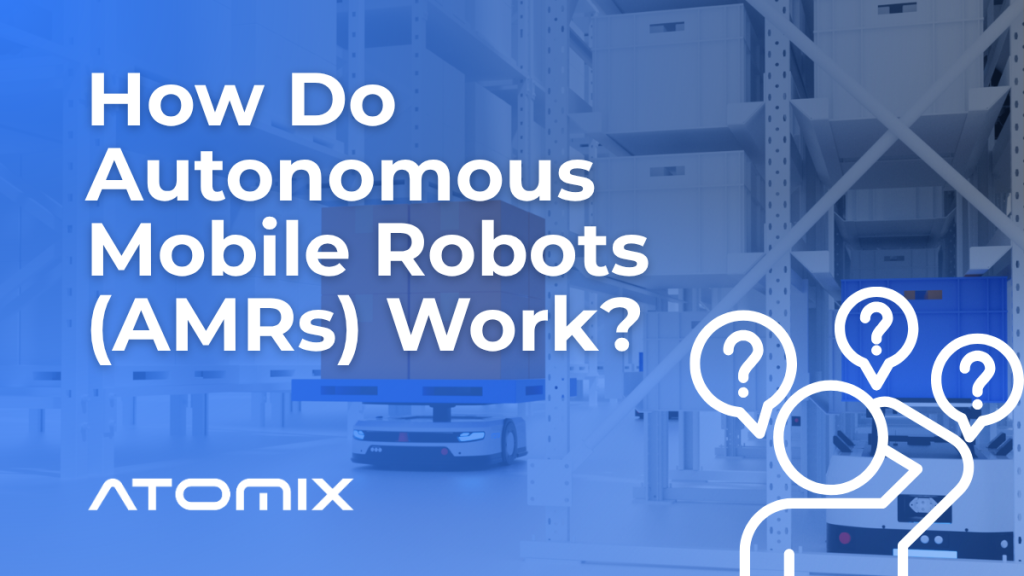
This is exactly where flexible automated material handling steps in to save the day. You don’t build bolted-down conveyor belts. You use free-roaming Autonomous Mobile Robots (AMRs).
You integrate the Pallet AMR for moving heavy loads across the floor tracklessly. To feed your packing stations rapidly with smaller items, you use the agile Bin AMR.
- The Technical Feature: These AMRs use LiDAR and natural feature navigation instead of following magnetic tape glued to the floor.
- The Business Benefit: Zero operational downtime during installation. You don’t have to shut down your live shipping lines to drill tracks into the concrete.
- The Comparison: Think about scalability again. If a conveyor belt breaks, your entire warehouse stops. It is a single point of failure. If an AMR needs maintenance, it just drives itself to the side. The rest of the fleet keeps moving. That is bulletproof scalable automation.
The Digital Brain (The Control Tower)
Hardware is totally useless without brilliant software to guide it.
You need an intelligent mastermind to orchestrate this entire ballet. Introduce the Atomixer Software. It sits above the hardware, acting as the ultimate traffic controller.
- The Technical Feature: It seamlessly integrates via API with your existing warehouse management system (WMS) and uses predictive traffic algorithms.
- The Business Benefit: It completely prevents robot collisions on the floor and ensures the oldest inventory is pulled first to prevent spoilage.
- The Comparison: Custom-coded legacy software takes years to build and update. The Atomixer platform offers plug-and-play scalability. If you add 20 new robots for the holiday peak season, the software instantly recognizes them and puts them to work in seconds.
Traditional vs. Automatic Picking: The ROI Breakdown
Let’s talk about money. The labor costs associated with manual order picking systems are absolutely devastating to your profit margins. Do you know that human pickers spend roughly 60% of their entire shift just walking?
They aren’t picking. They aren’t packing. They are just walking down aisles pushing heavy carts.
It is exhausting. It leads to incredibly high turnover rates because the job physically destroys their bodies.
We need to shift to the Goods-to-Person (G2P) methodology immediately.
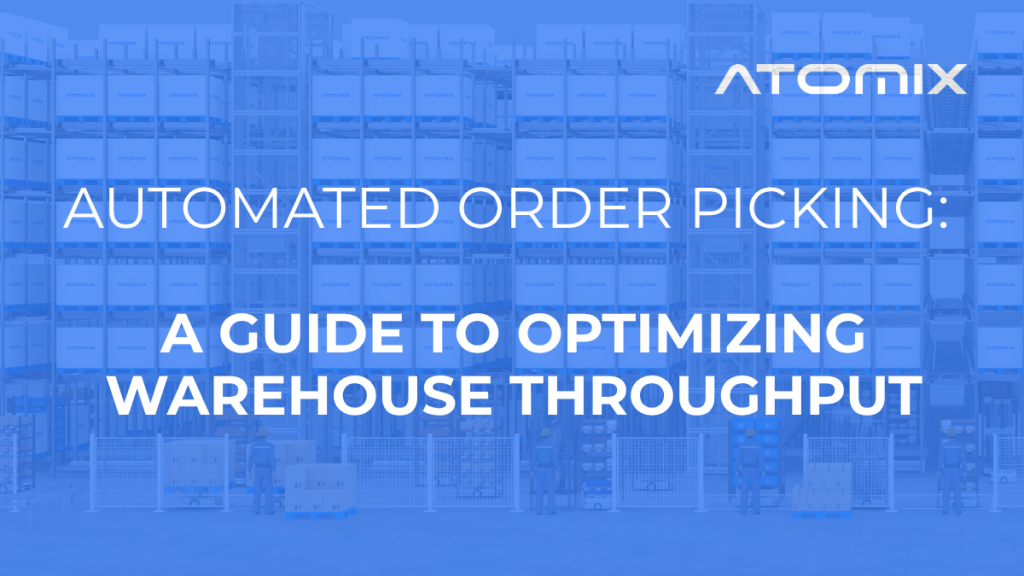
Instead of paying a person to walk to a shelf, automatic picking driven by your AS/RS brings the exact bin directly to a stationary worker. They stand on a comfortable anti-fatigue mat. The screen tells them exactly what to grab.
This completely slashes worker fatigue. It reduces your mispicks to near-zero because the system highlights the exact item. Best of all, it routinely triples your hourly throughput. The ROI math here is a no-brainer. You stop wasting wages on walking.
Top 3 Signs Your Facility Needs to Upgrade
Sometimes it is hard to admit your current system is failing. It’s a tough pill to swallow.
But ignoring the warning signs won’t fix your margins. Help yourself diagnose your own pain points right now. If you relate to any of these, you are in trouble.
Sign 1: You are at 80% physical capacity.
You look at your floor and panic. You are actively considering leasing a second building across town just to hold overflow inventory. Renting a second building destroys your cash flow.
Sign 2: Your labor turnover is skyrocketing.
You spend all summer hiring temp workers. They last a week. The physical demands of pushing manual carts 12 miles a day are just too high. You are bleeding money on constant training.
Sign 3: Your peak season is a disaster.
When the holiday rush hits, your order fulfillment is completely bottlenecked by human walking speed. You literally cannot pack boxes fast enough because people are stuck in traffic jams in the aisles.
Frequently Asked Questions (FAQs)
We hear the same questions from operations directors every single week. Here is the straight truth about modernizing your floor.
What is an automated storage retrieval system?
It is a highly integrated system of smart robotics, deep-lane shuttles, and control software. It is specifically designed to automatically store and retrieve your inventory from high-density racks. It completely eliminates the need for manual forklifts and those massive, wasteful human driving aisles.
How much space can an AS RS warehouse save?
The numbers are usually shocking to new buyers. By eliminating human driving aisles and utilizing the full vertical space of the facility right up to the ceiling, facilities can often reclaim up to 60% of their physical floor space immediately.
What is the difference between AS/RS and AMRs?
Think of it as inside versus outside. AS/RS technology (like your Bin or Pallet Shuttles) primarily operates within the dense storage racks to maximize your cubic volume. AMRs (Autonomous Mobile Robots) operate out on the open floor. They handle the horizontal transport of those goods, moving them from the storage grid over to your packing and shipping zones.
Future-Proof Your Floor Plan Today
Let’s be completely honest with each other.
The old way of running a supply chain is dead. You cannot rely on human legs and paper clipboards to meet today’s insane delivery expectations.
The ultimate value proposition here is simple. You don’t need a bigger, more expensive building. You just need a much smarter system inside the building you already have.
Stop throwing your profits away on empty air and exhausted workers.
You can future-proof your floor plan right now. Contact the Atomix team today. Let our experts design a custom layout for you utilizing the full suite of high-density shuttles, agile AMRs, and the brilliant Atomixer software. It is time to scale.