The Future of Retail Inventory Management: Scaling with Smart Warehouse Automation
Consumer expectations have completely shifted over the last few years. Everyone wants their orders delivered yesterday.
You undoubtedly feel the intense pressure to offer same-day or next-day shipping just to stay relevant in the market. This massive shift forces brands to rethink their entire logistics strategy. Companies are rapidly moving fulfillment centers closer to expensive urban areas to cut down on transit times.
But here is the hard truth. You can’t run a fast-paced omnichannel retail brand using manual spreadsheets anymore. Outdated metal shelves and manual clipboards just won’t cut it.
Space in these urban hubs is way too tight. The margin for error is absolutely zero. A single delayed shipment can result in a lost customer forever.
We are going to explore a much better way to handle this chaos. Combining modern retail inventory management software with agile warehouse robotics is the only way to survive the new era of micro-fulfillment. Let’s dive into how you can scale your operations without losing your mind.
The Biggest Retail Inventory Management Challenges Today
What keeps supply chain directors awake at night? Let’s look at the most painful retail inventory management challenges hitting the industry right now.
First up is omnichannel chaos. You are likely selling on Shopify, Amazon, and through physical brick-and-mortar stores all at once. If your stock levels aren’t perfectly synced across every platform, you will oversell. Selling an item you don’t actually have leads to canceled orders. Angry customers will immediately leave bad reviews and shop with your competitors.
Second involves your warehouse space utilization. Real estate in urban micro-fulfillment centers (MFCs) costs an absolute fortune. You simply can’t afford to waste precious floor space on wide forklift aisles. Every square inch of your facility needs to generate revenue.
Finally, we face massive labor shortages across the globe. Finding reliable people to pick and pack orders fast enough is getting incredibly hard. It is also getting much more expensive due to rising wages and high turnover rates. Managers spend half their day just trying to staff the floor instead of optimizing the business.
Beyond Basic Apps: The Shift to the Smart Warehouse
We need to move beyond basic digital tools. A simple point-of-sale system or a basic tracking app is no longer enough to handle high-volume e-commerce demands.
You need to embrace the concept of the smart warehouse.
What does that actually mean in plain English? It is the seamless integration of your digital supply chain (the software brain) with physical order fulfillment automation (the hardware muscle).
Your software must do a lot more than just count items on a shelf. It must communicate constantly. It needs to tell physical robots exactly where to go in real-time. It has to orchestrate the entire floor, predicting traffic jams and optimizing battery charging schedules for your robotic fleet.
Retail Inventory Management Best Practices for 2026
Let’s talk strategy. Implementing strict retail inventory management best practices is crucial for survival in a highly competitive landscape.
Best practices for managing inventory for thousands of skus
Managing a massive, diverse catalog is always tricky. You should always use ABC analysis to categorize your items based on their sales volume.
Fast-moving “A” items need to be highly accessible near your packing stations. But what about the slow-moving “C” items? Traditional warehouses bury these in the back, making them a nightmare for human workers to find.
Automated systems handle these perfectly. For instance, Atomix’s Bin AMRs can easily dive deep into high-density racks to retrieve rarely ordered items. They do this heavy lifting without slowing down your human workers at all.
Unifying Your Tech Stack
Data silos will absolutely destroy your operational efficiency.
Your Enterprise Resource Planning (ERP) tool, your retail inventory management systems, and your Warehouse Control System (WCS) must communicate seamlessly via APIs. If they don’t talk to each other instantly, you will end up with blind spots in your stock levels.
(Quick tip: If you are confused about how these control systems interact with your management tools, check out our recent guide on [WMS vs. WCS vs. WES: Choosing the Right Warehousing Software]. It breaks down the exact differences so you don’t buy the wrong platform).
How Automation Solves the Omnichannel Puzzle
Fulfillment gets incredibly messy when orders come rushing in from five different directions. You desperately need robust inventory management tools for omnichannel retail to keep things straight and organized.
This is exactly where the “Goods-to-Person” picking method shines.
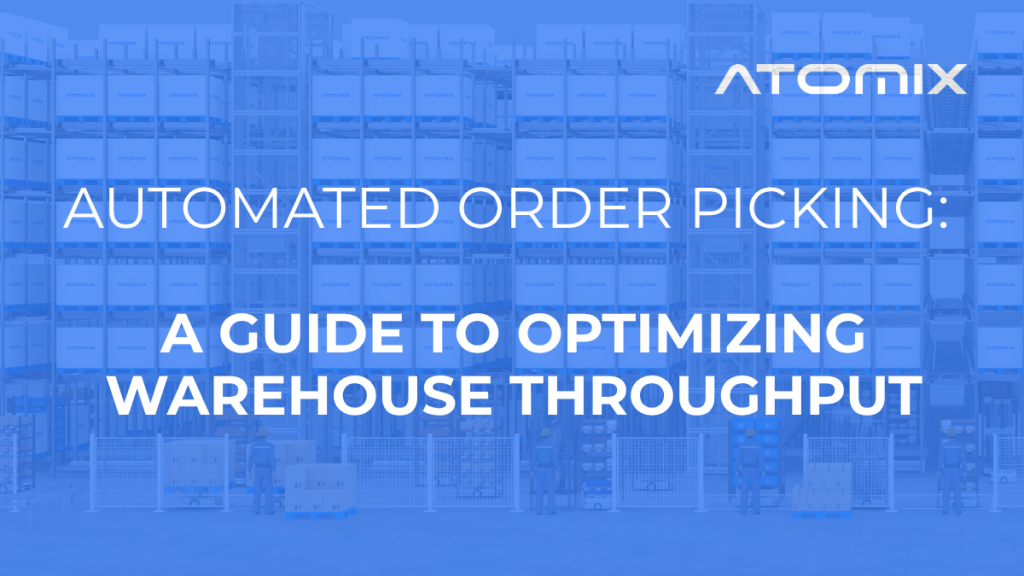
Instead of paying a human worker to walk miles across a hard concrete floor every shift, the shelves actually come to them. Intelligent robots retrieve the exact bin containing the ordered item. They bring it directly to a stationary packing desk.
Take a look at Atomix’s Picking Mix solutions as a prime example. Having robots bring shelves directly to packers drastically speeds up your e-commerce fulfillment times. Meanwhile, it maintains perfect stock accuracy for your physical retail side.
You eliminate human walking time. You eliminate picking the wrong item by mistake. You literally get the best of both worlds.
Choosing the Best Retail Inventory Management Software 2026
Upgrading your tech stack is a massive financial decision. If you are actively looking for the best retail inventory management software 2025 has to offer, keep this quick buyer’s checklist handy.
- Hardware Agnostic Capabilities: Can the software integrate smoothly with modern robotics? Don’t get locked into a proprietary system that refuses to talk to third-party machines.
- True Multi-Store Support: Can it seamlessly handle inventory across different physical retail locations and central warehouses at the exact same time?
- Real-Time Data Streams: Does it provide a live digital twin of your warehouse? Delayed data synchronization leads directly to stockouts and lost revenue.
- Scalability: Will the platform grow with you when you add a second or third micro-fulfillment center next year?
If a vendor says no to any of these questions, walk away.
Frequently Asked Questions (FAQs)
What is the best inventory management software?
Honestly, the “best” software depends entirely on your operational size. Small, single-location boutiques might survive on standard POS apps. However, growing omnichannel brands need robust, enterprise-grade systems that integrate natively with warehouse automation solutions to handle high-volume robotic picking without crashing.
Is there an app to keep track of inventory?
Yes, there are dozens of basic apps designed for very small businesses. However, once you start managing thousands of unique SKUs across multiple sales channels, a simple app will fail you. You need comprehensive retail inventory management systems connected directly to your automated hardware to prevent costly stockouts and sync errors.
What is the best software for inventory management?
The ideal platform is one that offers a unified view of your entire supply chain. It should bridge the gap between your digital storefront and your physical warehouse floor, allowing your management system to issue direct commands to your control software and robotic fleets in real-time.
How does automation improve retail space utilization?
It fundamentally changes your floor plan. Automated storage systems compress your inventory into high-density grids. Because robots don’t need wide aisles to turn around like forklifts do, you can eliminate human walkways. This allows retailers to store significantly more products in smaller, highly expensive urban micro-fulfillment centers.
Conclusion:
The retail industry moves way too fast for manual picking and basic spreadsheet software.
If you cling to outdated methods, your competitors who embrace automation will easily outpace you on delivery speed and accuracy. Customers don’t forgive late deliveries anymore.
Don’t let inefficient storage and slow fulfillment kill your retail growth. Discover how Atomix’s flexible robotics and intelligent software can completely transform your facility into a high-speed smart warehouse.
Stop settling for operational bottlenecks. Contact our team today to discuss your omnichannel strategy and learn how to scale your business the right way.