Demystifying Automated Material Handling Systems: Why Agile Robotics is the New Standard
You know you need to automate your floor. Your competitors are getting faster, and your labor costs keep climbing. So, you start looking into your options.
Almost immediately, you hit a massive wall.
Giant legacy companies bombard you with sales pitches. They hand you proposals with two-year deployment timelines. The price tags are absolutely terrifying. It feels like you have to build an entirely new multi-million dollar facility just to get started.
Buyers usually panic at this stage. They end up hiring expensive warehouse automation consultants to try and make sense of it all. These consultants often push you toward designing highly complex, custom material handling equipment.
The result? You spend a fortune building a rigid, inflexible facility. If your business model shifts next year, you are completely stuck.
We need to break this cycle. The logistics industry is rapidly abandoning custom-built monoliths. Today, we will explain why agile, modular material handling systems are the new standard. They deploy in a fraction of the time and cost significantly less. Let’s dive in.
What Actually Makes Up an Automated Material Handling System?
Let’s skip the heavy engineering jargon.
An automated material handling system is simply a network of robots, smart software, and machinery working together. Its entire job is to move, store, and control your goods throughout the building without human muscle.
The industry has evolved drastically.
The old way relied on bolted-down conveyors and massive steel sorters. These legacy systems took forever to build. The new way relies on free-roaming Autonomous Mobile Robots (AMRs). They don’t need physical tracks. They navigate your floor using sensors and digital maps, totally changing how we think about intralogistics.
The Hidden Trap of Custom Material Handling Equipment
Buying highly customized equipment feels like a luxury. It is actually a massive trap.
We call it vendor lock-in. When you build a rigid track system, you bolt your logistics to the concrete floor. You are permanently locked into that exact layout.
But what happens when things change?
Maybe you land a huge new client with oddly shaped boxes. Maybe your peak season volume suddenly doubles. Your custom steel track instantly becomes obsolete. You can’t just stretch a metal conveyor belt. You have to tear up your floor and halt your operations.
The sheer cost of modifying rigid material handling automation destroys your ROI. It kills your flexibility.
Why Agile Robotics is Replacing Legacy Systems
The market demands speed and adaptability. This is exactly why modern automated material handling is taking over.
At Atomix, we believe in a philosophy called “Standardized Heterogeneous Robots.”
Instead of building expensive, custom tracks for every client, we do the exact opposite. You simply deploy standard, highly capable robots. You put Pallet AMRs on the floor for heavy lifting and Bin AMRs in the aisles for picking.
You let the software customize the actual workflow.
Think about the growth potential here. If your facility needs to handle more volume, you don’t call a construction crew. You don’t pause your shifts. You just buy two more robots and drop them onto the floor. They connect to the network instantly.
Do You Really Need a Warehouse Automation Consultant?
This is a controversial question.
If you are building a massive, global supply chain network from scratch, a consultant brings great value. But if your goal is simply upgrading your current warehouse floor? You probably don’t need one.
Modern software has made deployment incredibly simple. You don’t need an army of engineers to write custom code for your building anymore.
Look at the Atomixer Software. It acts as an out-of-the-box brain for your entire operation. It smoothly orchestrates mixed fleets of robots using over 50 deep learning algorithms. It prevents collisions, assigns tasks, and optimizes traffic automatically. It bypasses the need for years of expensive, consultant-driven custom coding.
The Core Components of an Agile System
You don’t need a custom machine for every single task. You just need the right mix of agile tools. Here is how our standardized lineup solves complex logistics bottlenecks.
The Storage Mix
Stop building sprawling, massive racks that eat up your floor plan. The Atomix Storage Mix provides high-density vertical solutions. It packs your pallets and bins tightly together, maximizing your cubic space and delaying the need for a bigger building.
The Handling Mix
Forklifts are dangerous and expensive to operate. The Atomix Handling Mix introduces safe, trackless movement. These heavy-duty AMRs navigate dynamic, messy floors safely, moving heavy pallets from receiving to storage without dropping a sweat.
The Picking Mix
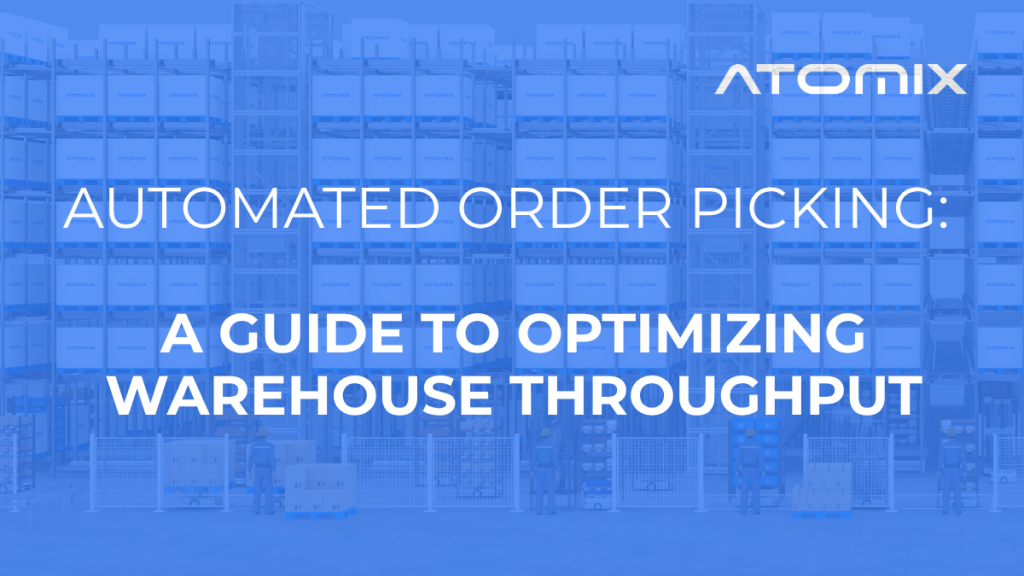
E-commerce demands lightning-fast fulfillment. The Atomix Picking Mix utilizes goods-to-person technology. The robots bring the exact shelf directly to your packers. It stops your workers from walking miles a day and practically eliminates picking errors.
Frequently Asked Questions (FAQs)
We hear the same concerns from operations directors every week. Here are the most common questions people ask about upgrading their tech.
What is an automated material handling system?
It is a complete technology ecosystem. It uses smart robotics, vision sensors, and intelligent control software to move inventory through a warehouse or factory safely. It completely eliminates the need for slow, manual transport methods like human-driven forklifts.
Why are companies shifting to autonomous material handling?
Rigid infrastructure is dying. Autonomous material handling systems (like AMRs) do not require fixed tracks, magnetic tape, or rails bolted to the floor. They offer total agility. This allows facilities to adapt their layouts instantly to meet unpredictable business demands.
How long does it take to deploy modular warehouse robotics?
Legacy custom systems can easily take up to two years to design and build. Modular AMR fleets are totally different. Because they are managed by intelligent software rather than physical tracks, they can often be mapped, deployed, and fully operational within a matter of weeks.
Conclusion:
Let’s wrap this up. Business is simply too unpredictable to bolt your logistics to the floor.
Consumer demands will change. Your product lines will shift. You can’t afford to get trapped by a two-year construction project that is outdated the minute you turn it on. Agile, standardized robots give you the freedom to scale up or scale down whenever you need to.
Stop letting legacy systems slow down your growth. Discover how Atomix’s flexible material handling systems can completely future-proof your facility. Book a Meeting with our automation team today to bypass the bottlenecks and start scaling your floor.